



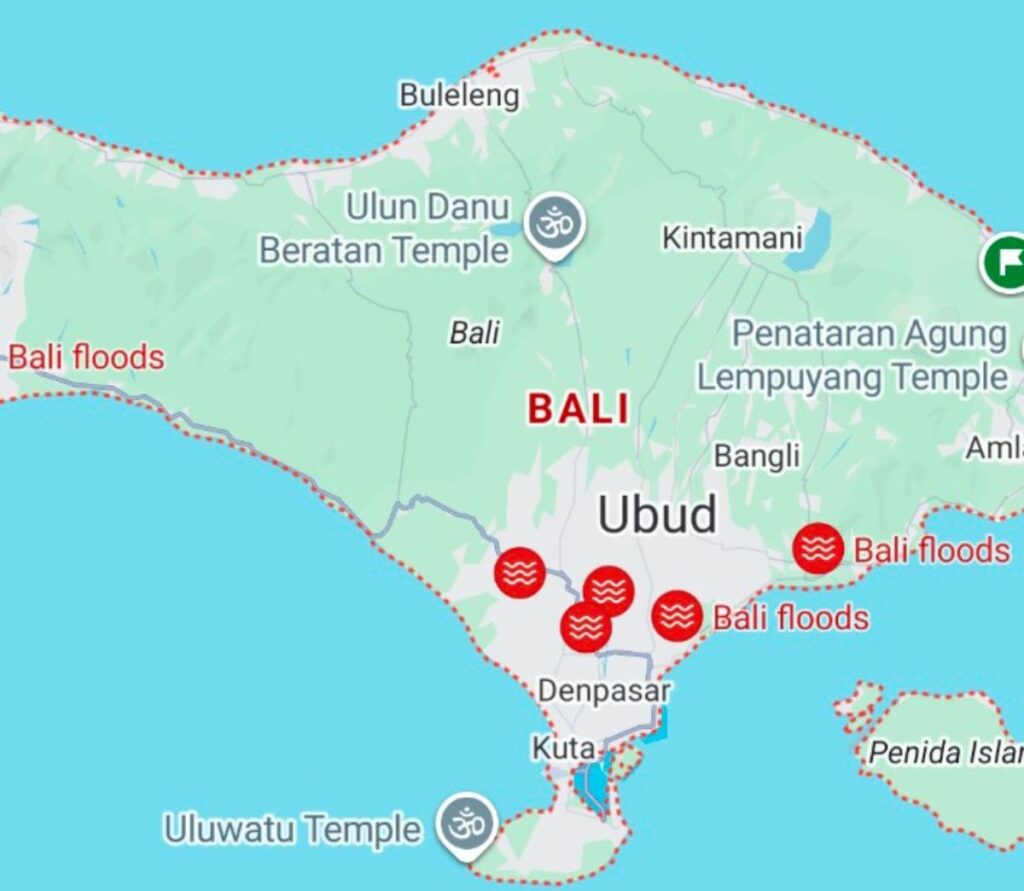
Bali Residents Sue Government Over Deadly Floods, Citing Environmental Mismanagement
A coalition called Pulihkan Bali (the Bali Movement for Environmental Restoration) has officially launched a citizen lawsuit against 15 government bodies following the devastating flash floods that hit Bali in September 2025. The group argues that the disaster was not just due to unusually heavy rain — but deeply rooted in structural failures in land management, waste control, and spatial planning.
At a press conference in Denpasar, coalition representatives including Ignatius Rhadite (a public advocate) and climate researcher Ida Bagus Mandhara Brasika expressed that the flood exposed long-standing policy negligence. They hold the government responsible for permitting unchecked land conversion, ignoring open green spaces, and failing to enforce early-warning systems.
The coalition’s legal move begins with a formal notice sent to national and local authorities — including the President, several ministers (Environment, Public Works, Agrarian Affairs, among others), the Governor of Bali, and local city/regency leaders. They have given these bodies 60 days to respond meaningfully; otherwise, the case will proceed to the Denpasar District Court.
Among the coalition’s demands:
- Moratorium on new development permits that could harm the environment.
- A Strategic Environmental Assessment (KLHS) for Sarbagita (Denpasar, Badung, Gianyar, Tabanan), to act as a framework for sustainable development.
- Policy reforms to improve disaster resilience, including better spatial planning, flood infrastructure, and waste management.
- The enactment of a Regional Law on Climate Justice, covering climate mitigation, adaptation, and compensation.
- A meaningful dialogue between community representatives and the government before escalating the lawsuit.
The coalition cites alarming environmental data as part of its case: between 2019 and 2024, Bali lost 6,522 hectares of rice fields, mainly due to post-pandemic real estate and tourism development. In addition, only 3% of the Ayung River watershed remains forested, drastically reducing natural water absorption and increasing flood risk.
They also highlight serious gaps in disaster response: flood early-warning systems, evacuation plans, and disaster infrastructure are reportedly inadequate.
In reaction, the Ministry of Environment has committed to tighter land-use oversight in critical areas, especially the Ayung watershed.
Pulihkan Bali emphasizes that its lawsuit is not driven by political opposition, but by a genuine demand for accountability. As they put it: “This is not a fight — it’s a call for a safer, more sustainable Bali.”
Source: Mongabay