


Why Water Management Makes or Breaks a Mine Site
If you’ve ever tried to run a mining operation in a remote part of Indonesia, you already know the punchline before we even get to it: water is the thing that quietly decides whether your project runs smoothly or turns into a logistical headache.
Not the ore grade. Not even the permits, most of the time. Water.
Mining sites in Indonesia, whether it’s a nickel operation in Sulawesi, a gold and copper site in Sumbawa, or a coal operation in Kalimantan, are almost always located far from municipal water infrastructure. That means every liter of clean water your workforce drinks, every liter used in processing, and every liter of wastewater or tailings-adjacent runoff that leaves the site has to be handled on-site, by design, not by luck. This is exactly why mining companies operating in Indonesia end up searching for a specialized water treatment partner rather than trying to bolt together a solution themselves.
Why Mining Sites Can’t Just “Wing It” With Water
A mine site isn’t a hotel or a housing complex. The water challenges stack on top of each other:
- Process water needs for mineral processing, dust suppression, and equipment cooling
- Potable water for workers living on remote camps, sometimes hundreds of people
- Wastewater and sewage treatment for entire worker accommodation blocks
- Environmental compliance, since Indonesian regulations on mining discharge (and increasingly, ESG expectations from investors) are not something you want to gamble on
- Logistics, because trucking in bottled water or shipping out waste isn’t sustainable at scale, cost-wise or operationally
This is where a company with actual mining-sector experience — not just general water treatment know-how — becomes the difference between a system that works for 15 years and one that fails within a rainy season.
What a Real Mining Water Treatment Partner Should Bring to the Table
A lot of vendors will happily sell you a reverse osmosis unit and walk away. But mining operations need something closer to a full design-build relationship, because every site’s water source, terrain, and workforce size is different. A good partner typically covers:
- Site-specific design, not a catalog product. Water quality at a mine in Nusa Tenggara looks nothing like water at a site in Papua. Salinity, turbidity, and seasonal variation all change the engineering approach, this needs to be assessed before any equipment gets specified.
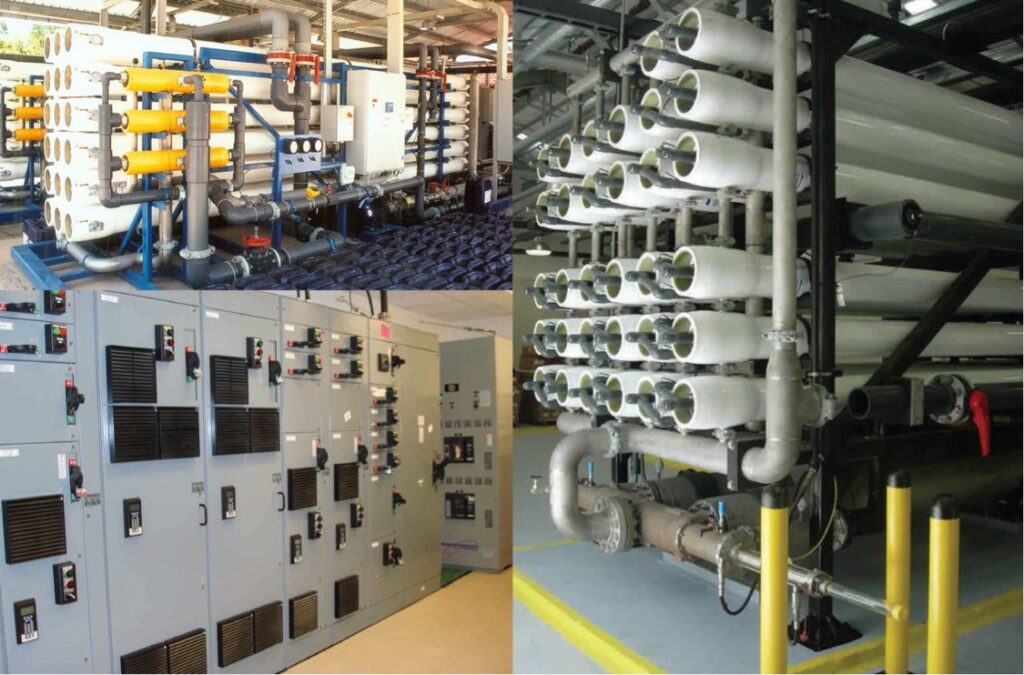
- Reverse osmosis and desalination capability. Many Indonesian mine sites are coastal or have brackish groundwater, so desalination and RO systems aren’t optional extras, they’re often the only realistic way to produce drinking-quality and process water on-site.
- Wastewater treatment that can handle a remote workforce. Technologies like Air Recirculation Bioreactor (ARB) systems or modular containerized sewage treatment plants are built for exactly this scenario: hundreds of workers living in a camp with no connection to a municipal sewer line.
- Turnkey EPC delivery. Design, procurement, construction, and commissioning under one contract avoids the finger-pointing that happens when three different vendors each install a piece of the puzzle.
- Ongoing operations and maintenance. Mining projects run for years, sometimes decades. A water treatment system that isn’t backed by an O&M contract or at least responsive after-sales support, becomes a liability the moment something breaks down 300km from the nearest city.
Why Experience in Indonesia Specifically Matters
This sounds obvious, but it trips up a lot of foreign mining companies: Indonesia isn’t a single, uniform operating environment. Import regulations, local fabrication capability, environmental permitting (AMDAL), and even how quickly spare parts can reach a remote site all vary depending on where in the archipelago you’re building.
A company that’s been designing and building water systems in Indonesia since the 1990s, working across mining, resort, and municipal projects from Bali to Sumbawa to Papua, has already solved problems that a newcomer is going to hit for the first time on your project. That institutional knowledge, frankly, is worth more than any single piece of equipment.
A Track Record Worth Looking At
Biosystems Group is one example of this kind of specialist. Based in Bali and operating since 1996, the company has delivered water and wastewater treatment projects for mining operators including PT. Amman Mineral International and Newmont, alongside resort, hotel, and municipal clients across Indonesia and Southeast Asia. Over 200 turnkey EPC and O&M contracts later, their scope covers reverse osmosis and desalination, potable and process water systems, ARB wastewater treatment, modular containerized sewage facilities, and in-house design, fabrication, and controls integration, which matters a lot when a mine site needs one accountable partner instead of five different subcontractors.
If you’re evaluating water treatment for a mining project in Indonesia, the real question isn’t “which brand of RO membrane should I buy.” It’s: who has actually built and maintained systems on Indonesian mine sites, understands the regulatory landscape, and will still be answering the phone in year seven of your project?
That’s the kind of partner worth talking to before the engineering drawings are even finalized, not after the first system fails.
Looking for a water treatment partner with real mining experience in Indonesia? Biosystems Group has been designing, building, and maintaining water and wastewater systems for mining, resort, and industrial clients across Indonesia since 1996.